
Plus500’s user-friendly platform and diversified market offerings make it an appealing alternative for futures traders. This full review will review the intricacies of Plus500’s futures products, helping you decide whether it fits your trading ambitions well.
Overview
Plus500 is an online trading platform with an international presence, offering access to a range of financial markets. Headquartered in Haifa, Israel, the company provides trading products across several asset classes, including cryptocurrencies, agriculture, metals, forex, interest rates, energy, and equity indices, depending on the service and region. Plus500 also offers a proprietary trading platform designed to give users access to market information and trading tools in one place. Its services extend to various markets, including Australia, the European Economic Area (EEA), and parts of the Middle East, subject to local regulations and product availability. Traders should check the specific entity, available instruments, and applicable terms in their country before opening an account.
| Broker | Plus500 |
| Regulation | FCA, CySEC, ASIC, MAS, FSA, EFSA, DFSA, CFTC |
| Minimum Deposit | $100 |
| Fund Withdrawal Fee | No withdrawal fees for most methods |
| Commissions | Commissions only, No spreads |
| Swap Fees | Applicable swap fees/overnight financing |
| Leverage | Varies by instrument |
| Margin requirements | Varies by asset class typically between 2% to 5% |
Safety and Security
Safety is an important consideration when choosing an online trading platform. Plus500 is an established trading provider that operates through different regulated entities in various countries. The regulatory protections available to customers depend on the specific Plus500 company they register with and their country of residence.
Before opening an account, traders should verify the relevant entity’s licence through the appropriate regulator’s official website. They should also review the platform’s risk disclosures, account terms, and policies for protecting client funds.
Plus500 offers trading products that may involve leverage, which can increase both potential gains and potential losses. Users should understand these risks and check what protections apply to their accounts before depositing money.
Minimum Deposit and Account Types
The minimum deposit required by Plus500 can vary depending on the country, payment method, and trading service being used. Traders should check the current requirements displayed during registration or on the company’s official website.
Plus500 offers different services depending on the market. These may include CFD trading and, in certain regions, futures trading through a separate service. The account options, eligibility requirements, and available products are not necessarily the same across all countries.
Before selecting an account, users should review the minimum funding amount, supported currencies, trading conditions, and any account-specific requirements. It is also important to understand whether the service offers leveraged products and how margin requirements work.
How to Open a Plus500 Account
Opening a Plus500 account generally involves a straightforward registration process. The exact steps depend on the service and the user’s location.
- Visit the official website: Choose the Plus500 service available in your country.
- Register an account: Enter the requested personal details and contact information.
- Verify your identity: Complete any required identity checks and provide supporting documents if requested.
- Complete the suitability assessment: Depending on the service and local regulations, you may need to answer questions about your trading experience and financial knowledge.
- Review the account terms: Check the applicable fees, available instruments, margin requirements, and risk disclosures.
- Fund your account: Select an available payment method and meet the applicable minimum deposit requirement.
- Explore the platform: Familiarise yourself with the interface and available tools before placing a live trade.
Make sure you are using the official Plus500 website and the correct service for your country. Account approval and product access may depend on eligibility checks and local regulations.
Trading Platforms and Tools
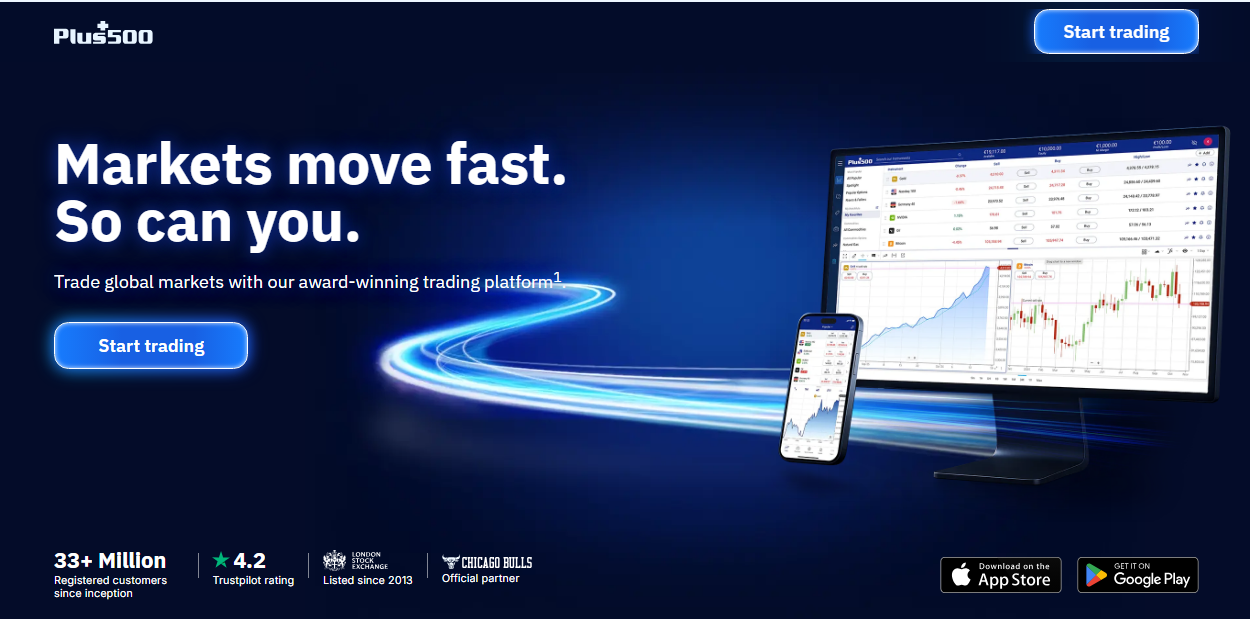
Plus500 is known for its proprietary trading platform, which is designed to bring trading activities and market information together in one interface. Depending on the service, users may be able to access the platform through a web browser or mobile application.
Common platform features may include price charts, market watchlists, account information, order management, and tools for monitoring open positions. The available features can vary between CFD and futures services.
The platform is designed to make it easier for users to view market movements and manage trades. However, traders should learn how orders work, understand the difference between market and pending orders, and review any available risk-management features before trading with real money.
Users who prefer third-party platforms should confirm whether their preferred software is supported. Plus500’s proprietary platform may differ from brokers that offer MetaTrader or other external trading applications.
Markets Available for Trade
Plus500 provides access to a range of financial markets, depending on the service and jurisdiction. Available instruments may include:
- Forex: Selected currency pairs from the global foreign exchange market.
- Cryptocurrencies: Instruments linked to selected digital assets, where available.
- Metals: Products associated with metals such as gold and silver.
- Energy: Instruments linked to markets such as oil and natural gas.
- Agriculture: Selected agricultural commodity contracts, where offered.
- Equity indices: Instruments that track the performance of groups of shares.
- Interest rates: Selected products linked to interest-rate markets.
- Shares and other instruments: Availability depends on the particular Plus500 service and country.
Not every product is available to every customer. Plus500’s CFD service and futures offering may provide different instruments and trading conditions.
Before trading, users should check the current instrument list and understand how each product works. In particular, they should confirm whether they are trading a derivative or another type of financial product rather than assuming they directly own the underlying asset.
Fees, Spreads, and Commissions
Understanding trading costs can help users compare Plus500 with other providers. The charges that apply depend on the service, instrument, account terms, and market conditions.
Potential costs may include:
- Spreads: The difference between the buy and sell prices quoted for an instrument.
- Overnight funding: Charges or credits that may apply to positions held overnight on certain products.
- Currency conversion: Fees or adjustments that may apply when an account transaction involves a different currency.
- Inactivity fees: Charges may apply to inactive accounts under the relevant terms.
- Futures-related costs: Futures trading may involve exchange, clearing, or other contract-specific fees, depending on the service.
The fee structure may differ between Plus500’s CFD and futures services. Some products may not charge a separate trading commission, but this does not mean trading is cost-free.
Traders should read the current fee schedule and contract details before placing orders. Comparing spreads, funding charges, and any additional fees together gives a clearer picture of the overall cost.
Deposits and Withdrawals
Plus500 supports various deposit and withdrawal methods, but the available options depend on the customer’s location, account type, and applicable service. Payment methods may include bank cards, bank transfers, or other supported electronic payment options.
Before depositing funds, users should check the minimum deposit, supported currencies, payment processing conditions, and any charges that may apply. Using a payment method registered in the account holder’s own name may also be required.
Withdrawal requests can be subject to identity verification, security checks, and the broker’s payment procedures. Processing times vary depending on the method and the financial institution involved.
Customers should review the withdrawal policy before funding their accounts and keep records of deposits and withdrawals. If a payment is delayed, they should contact Plus500 through its official support channels.
Education and Research
Educational resources can help traders understand how financial markets work and make more informed decisions. Depending on the service and region, Plus500 may provide learning materials, market information, platform guidance, and explanations of trading concepts.
New traders can benefit from studying topics such as spreads, leverage, margin, volatility, and risk management. They should also learn how economic announcements and market events can affect prices.
Market information and educational content can support research, but they cannot predict price movements with certainty. Users should avoid relying entirely on forecasts or trading ideas and should make sure they understand the risks associated with each product.
Where a demo account is available, practising with virtual funds can help users become familiar with the platform before committing real money.
Customer Support
Customer support is an important part of the trading experience, especially when users need help with account verification, deposits, withdrawals, or technical issues.
Plus500 provides online support options, with the available contact methods and service arrangements depending on the user’s location and the specific service. Customers should use the contact channels listed on the official website to ensure they are communicating with the company.
Before opening an account, it is worth checking the support options and any published service information. Users should also protect their account details and never share passwords or verification codes with people claiming to provide assistance.
For questions involving fees, payments, or trading conditions, customers should refer to the terms that apply to their particular account.
In Conclusion
Plus500 is an online trading provider offering access to multiple financial markets through its proprietary platform and region-specific services. Its range of instruments and web and mobile access may appeal to traders who prefer managing their trading activities through a single interface.
However, the experience can differ depending on the product and the country in which the account is registered. Regulation, minimum deposit requirements, available markets, fees, and payment methods should all be checked before making a decision.
Plus500 may be worth considering for traders whose needs match its available services, but it is important to compare it with other providers and read the relevant terms carefully. Leveraged trading, CFDs, and futures can carry substantial risk, and users should never trade money they cannot afford to lose.
Frequently Asked Questions
1. What is Plus500?
Plus500 is an online trading provider offering access to different financial markets through services that vary by country. Its offerings include CFD trading and, in certain markets, futures trading.
2. Is Plus500 regulated?
Plus500 operates through regulated entities in different jurisdictions. The applicable regulator and protections depend on the legal entity serving the customer. Users should verify the details through the relevant regulator’s official website.
3. What trading platform does Plus500 offer?
Plus500 is known for its proprietary trading platform, which may be accessed through a web browser or mobile application. Platform features depend on the service and region.
4. What markets can I trade with Plus500?
Depending on the service and location, available markets may include forex, cryptocurrencies, metals, energy, agricultural commodities, equity indices, interest rates, and other financial instruments.
5. What is the minimum deposit at Plus500?
The minimum deposit varies according to the service, country, and payment method. Customers should check the current requirements during registration or on the official website.
6. Does Plus500 charge trading fees?
Trading costs may include spreads, overnight funding charges, currency conversion fees, inactivity fees, or futures-related costs. The exact charges depend on the product and applicable terms.
7. Does Plus500 offer a demo account?
A demo account may be available for certain services and regions. Users should check the relevant Plus500 platform to confirm availability and conditions.
Reviews
Easily useable App
Easily useable App. Anyone who has little knowledge to this App. I like it